What Is The Function Of Coffee Maker And How It Works
The function of a coffee maker is to automate the process of brewing coffee by heating water, passing it through coffee grounds, and delivering a fresh cup. Understanding how a coffee maker works helps you choose the right machine, brew better-tasting coffee, and troubleshoot common issues. This guide covers every aspect of coffee maker function, from basic mechanics to advanced brewing science.
Every morning, millions of people rely on their coffee maker to start the day right. But have you ever stopped to think about what a coffee maker actually does? Understanding the function of a coffee maker goes far beyond just pressing a button. It opens up a world of better brewing, smarter choices, and richer coffee experiences.
A coffee maker is a kitchen appliance designed to brew coffee automatically. It takes whole beans or pre-ground coffee, heats water to the right temperature, and passes that water through the grounds. The result is a fresh, hot cup of coffee ready to enjoy. Whether you use a simple drip machine or a fancy espresso maker, the core function of a coffee maker remains the same: make great coffee with minimal effort.
In this guide, we will explore exactly how a coffee maker works. We will look at the key parts, the science behind brewing, the different types of machines, and practical tips to get the best results. By the end, you will know everything you need to choose, use, and maintain your coffee maker like a pro.
Key Takeaways
- Core Function: A coffee maker heats water and passes it through grounds to extract flavor automatically.
- Key Parts: The water reservoir, heating element, filter basket, and carafe are essential components.
- Multiple Types: Drip, single-serve, espresso, and percolator machines each serve different brewing needs.
- Brewing Science: Temperature, grind size, and water-to-coffee ratio all affect the final cup quality.
- Maintenance Matters: Regular cleaning keeps your machine functioning at peak performance.
- Alternatives Exist: You can make coffee in a microwave oven if you don’t have a dedicated machine.
- Reheating Tip: Avoid reheating coffee in the oven; use a thermal carafe or reheat gently on the stove instead.
📑 Table of Contents
- What Is The Function Of Coffee Maker?
- How A Coffee Maker Works: The Step-By-Step Process
- Key Parts Of A Coffee Maker
- Types Of Coffee Makers And Their Functions
- Brewing Science: What Makes Coffee Taste Good
- Common Coffee Maker Problems And Solutions
- Tips For Getting The Most From Your Coffee Maker
- Maintenance: Keeping Your Coffee Maker Running Well
- Final Thoughts On The Function Of Coffee Maker
What Is The Function Of Coffee Maker?
The function of a coffee maker is to brew coffee efficiently and consistently. At its core, the machine automates a process that humans used to do by hand for centuries. Instead of boiling water in a pot, pouring it over grounds, and straining the liquid, a coffee maker handles every step with precision.
Here is what a coffee maker does in simple terms:
- Heats water to the ideal brewing temperature
- Distributes water evenly over coffee grounds
- Extracts flavor and oils from the grounds
- Filters out the used grounds
- Delivers brewed coffee into a carafe or cup
This entire process happens in just a few minutes. The beauty of a coffee maker is that it removes guesswork. You set the machine, and it handles the rest. This consistency is why coffee makers have become one of the most popular kitchen appliances in the world.
Why Understanding The Function Matters
Knowing how your machine works helps you brew better coffee. When you understand the function of a coffee maker, you can troubleshoot problems, choose the right settings, and pick the best machine for your needs. For example, if your coffee tastes weak, you might adjust the grind size or water ratio. If it tastes bitter, you might check the brewing temperature. These small tweaks make a big difference.
How A Coffee Maker Works: The Step-By-Step Process
The brewing process inside a coffee maker follows a clear sequence. Each step plays a vital role in producing a great cup. Let us break it down.
Step 1: Water Reservoir Fills
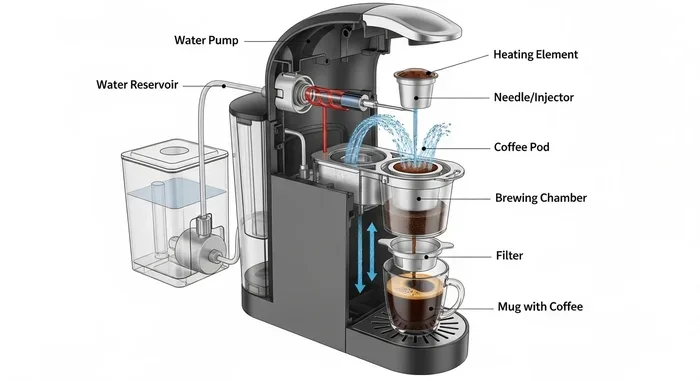
Every coffee maker starts with water. You fill the water reservoir, which is usually a clear tank on the back or side of the machine. The reservoir holds the water that will be heated and used for brewing. Some machines have visible water levels, while others have indicators on the side.
The size of the reservoir varies. A standard drip machine holds 10 to 12 cups of water. Single-serve machines use much less. The reservoir capacity determines how much coffee you can brew at once.
Step 2: Water Heats Up
Once you start the machine, the heating element begins warming the water. The ideal brewing temperature for coffee is between 195 and 205 degrees Fahrenheit. This is hot enough to extract flavor but not so hot that it burns the grounds.
The heating element is usually located at the base of the machine. In some models, it sits beneath the water reservoir. In others, it is part of the tube system that moves water upward. Regardless of placement, the goal is the same: heat the water quickly and evenly.
Step 3: Water Moves Through The System
After heating, the water travels through a tube system. Gravity and pressure push the hot water upward and through the coffee filter basket. In drip machines, a showerhead distributes water over the grounds. In espresso machines, pressure forces water through a compacted puck of coffee.
The way water moves through the grounds matters a lot. Even distribution ensures that all the coffee extracts properly. Uneven water flow leads to weak or bitter coffee.
Step 4: Extraction Happens
As hot water passes through the coffee grounds, it extracts flavors, oils, and caffeine. This process is called coffee extraction. The grounds sit in a paper or reusable coffee filter that catches the used particles while letting the liquid pass through.
Extraction time varies by machine type. A drip machine takes about 5 to 10 minutes. An espresso machine extracts in 25 to 30 seconds. Each method produces a different flavor profile and strength.
Step 5: Coffee Collects In The Carafe
The brewed coffee drips or flows into a thermal carafe or glass pot below the filter basket. A thermal carafe keeps coffee hot without a warming plate, which can cause overcooking. Glass pots look classic but usually need a separate warmer to stay hot.
Some modern machines brew directly into individual cups or travel mugs. These single-serve coffee makers use pods or capsules for convenience and speed.
Key Parts Of A Coffee Maker
To truly understand the function of a coffee maker, you need to know its main parts. Each component plays a specific role in the brewing process.
Water Reservoir
The water reservoir stores the water before brewing. It is typically removable for easy filling and cleaning. Look for machines with clearly marked water lines so you can measure the right amount for your brew.
Heating Element
The heating element is the engine of the coffee maker. It converts electrical energy into heat. Without a working heating element, the machine cannot brew coffee at all. This is one of the first parts to check if your machine stops working.
Filter Basket
The filter basket holds the coffee grounds during brewing. Paper filters remove more oils and sediment, while reusable metal filters let more flavor through. The basket shape and size vary by machine model.
Carafe Or Mug
The carafe collects the finished coffee. Thermal carafes keep coffee hot for hours. Glass carafes look traditional but cool down faster. Many single-serve coffee makers skip the carafe entirely and brew directly into a cup.
Control Panel
The control panel lets you set brew strength, timing, and temperature. Programmable machines can start brewing before you wake up. Advanced models offer settings for different coffee styles and cup sizes.
Types Of Coffee Makers And Their Functions
Not all coffee makers work the same way. Different types serve different brewing styles and preferences. Here is a look at the most popular coffee machine types.
Drip Coffee Makers
The drip coffee maker is the most common type found in homes and offices. It works by dripping hot water over grounds in a filter basket. The coffee then drips into a carafe below. Drip machines are simple, reliable, and easy to use.
Function: Heats water, drips it over grounds, filters, and collects in a carafe.
Drip machines are perfect for brewing large batches. They are ideal for families, offices, and anyone who wants multiple cups at once.
Single-Serve Coffee Makers
A single-serve coffee maker brews one cup at a time using pods or capsules. Popular brands like Keurig and Nespresso use this system. You insert a pod, press a button, and your coffee is ready in under a minute.
Function: Heats a small amount of water, forces it through a pod, and delivers a single cup.
These machines are great for convenience and variety. You can switch between flavors easily. However, they can be more expensive per cup than traditional methods.
Espresso Machines
An espresso machine uses high pressure to force hot water through finely ground coffee. This produces a concentrated, rich shot of espresso. Espresso machines range from simple stovetop models to complex automatic systems.
Function: Pressurizes hot water and forces it through compacted coffee grounds at high speed.
Espresso machines are ideal for coffee lovers who enjoy strong, bold flavors. They are the base for drinks like lattes, cappuccinos, and americanos.
Percolators
A percolator is one of the oldest coffee brewing methods. It cycles boiling water through grounds repeatedly. The result is a strong, bold cup of coffee. Percolators can be stovetop or electric.
Function: Boils water, sends it up through a tube, and drips it over grounds multiple times.
Percolators are popular among camping enthusiasts and those who love very strong coffee. They are simple machines with no moving parts.
French Press
A French press is not technically a machine, but it serves a similar function. You steep grounds in hot water and then press a plunger to separate the liquid from the grounds. It produces a full-bodied, rich cup.
Function: Steeps coffee grounds in hot water and uses pressure to filter the brew.
French presses are affordable, easy to use, and require no electricity. They are a favorite among coffee purists.
Brewing Science: What Makes Coffee Taste Good
The function of a coffee maker is not just about heating water. It is about creating the right conditions for optimal coffee brewing. Several factors determine the quality of your final cup.
Brewing Temperature
Water temperature is critical. Too hot, and you over-extract the grounds, creating bitter coffee. Too cool, and you under-extract, resulting in weak, sour coffee. The sweet spot is 195 to 205 degrees Fahrenheit. Most quality coffee makers hit this range automatically.
Grind Size
The size of your coffee grounds affects extraction speed. Fine grinds work best for espresso because they slow the water down. Coarse grinds are better for drip machines and French presses. Matching your grind to your machine is essential for great taste.
Water-To-Coffee Ratio
The ratio of water to coffee grounds determines strength. A standard ratio is two tablespoons of grounds per six ounces of water. You can adjust this to suit your taste. More grounds make stronger coffee. Less grounds make it milder.
Contact Time
How long the water stays in contact with the grounds matters too. Drip machines have a set brew cycle. Espresso machines extract in seconds. French presses steep for four minutes. Each method has an ideal contact time that brings out the best flavor.
Common Coffee Maker Problems And Solutions
Even the best coffee maker can have issues. Here are the most common problems and how to fix them.
Machine Won’t Turn On
Check the power cord and outlet first. Make sure the water reservoir is seated properly. Many machines have a safety switch that prevents brewing without water.
Coffee Tastes Weak
Your grounds may be too coarse, or you may not be using enough. Try a finer grind or add more coffee. Also check that the water is hot enough when it reaches the grounds.
Coffee Tastes Bitter
Bitter coffee usually means over-extraction. The water may be too hot, or the brew time too long. Try a coarser grind or check your machine’s temperature settings.
Machine Leaks Water
A cracked reservoir or loose seal often causes leaks. Inspect the water tank and tubing for damage. Clean the machine regularly to prevent mineral buildup that can cause leaks.
Coffee Maker Takes Too Long
Mineral deposits in the heating element slow down brewing. Run a vinegar and water cycle to descale the machine. Use filtered water to reduce future buildup.
Tips For Getting The Most From Your Coffee Maker
Want to improve your daily coffee? Follow these practical tips.
- Use fresh, filtered water. Good water makes a huge difference in taste.
- Grind beans just before brewing. Fresh grounds release more flavor and aroma.
- Clean your machine monthly. Descaling removes mineral buildup that affects performance.
- Store coffee beans properly. Keep them in an airtight container away from light and heat.
- Do not reuse grounds. The best flavor comes from the first extraction.
- Preheat your carafe. Warm water in the carafe before brewing to keep coffee hot longer.
- Use the right grind for your machine. Match the grind size to your specific coffee maker type.
If you ever find yourself without a coffee maker, remember that alternatives exist. You can make coffee in a microwave oven using a simple method that heats water and steeps grounds together. It is not as consistent as a dedicated machine, but it works in a pinch.
Maintenance: Keeping Your Coffee Maker Running Well
Regular maintenance extends the life of your coffee maker and keeps your coffee tasting fresh. A well-maintained machine brews better and lasts longer.
Start by cleaning the filter basket after every use. Remove used grounds and rinse the basket with warm water. Wash the carafe regularly to prevent oil buildup and stains.
Descale your machine every one to three months. Mineral deposits from tap water can clog the heating element and tubes. A simple solution of white vinegar and water does the job. Run a full cycle with the solution, then rinse with clean water two or three times.
Replace paper filters as needed. If you use a reusable filter, wash it thoroughly after each brew. Check the water reservoir for mold or buildup and clean it regularly.
Also, wipe down the exterior and control panel. A clean machine looks better and functions better. These small habits keep your coffee maker in top shape for years.
Final Thoughts On The Function Of Coffee Maker
The function of a coffee maker is simple yet brilliant. It transforms basic ingredients — water and coffee grounds — into a delicious, energizing beverage with minimal effort. Understanding how your machine works empowers you to brew better coffee every single day.
From the heating element to the filter basket, every part of a coffee maker serves a purpose. Whether you prefer a drip machine, a single-serve pod system, or a classic French press, the principles remain the same. Heat water, extract flavor, filter, and serve.
Take time to learn your specific machine. Experiment with grind sizes, water ratios, and brew times. The more you understand your coffee maker, the better your coffee will taste. A great cup of coffee starts with understanding the machine that makes it.
Keep your machine clean, use quality beans and filtered water, and enjoy the process. A well-functioning coffee maker is one of the best investments you can make for your morning routine. Here is to many more perfect cups ahead.
Frequently Asked Questions
What Is The Primary Function Of A Coffee Maker?
The primary function of a coffee maker is to heat water and pass it through coffee grounds to brew a fresh cup of coffee automatically. The machine handles every step from heating to filtering, delivering consistent results with minimal effort.
How Does A Drip Coffee Maker Work?
A drip coffee maker heats water in a reservoir, pushes it through a tube, and drips it over coffee grounds in a filter basket. The brewed coffee then drips into a carafe or pot below. This simple process produces a reliable and consistent cup every time.
What Temperature Does A Coffee Maker Brew At?
Most coffee makers brew between 195 and 205 degrees Fahrenheit. This temperature range is ideal for extracting the best flavors from coffee grounds without burning them. Machines that fall outside this range may produce weak or bitter coffee.
Can You Use A Coffee Maker Without A Filter?
Yes, you can use a reusable metal filter or even brew without a filter in some cases. However, using a filter produces cleaner coffee by removing oils and sediment. Without any filter, grounds may end up in your cup.
How Often Should You Clean Your Coffee Maker?
You should clean your coffee maker after every use and deep clean it monthly. A monthly descaling cycle with vinegar and water removes mineral buildup. Regular cleaning keeps the machine running efficiently and your coffee tasting fresh.
Is A Single-Serve Coffee Maker Worth It?
A single-serve coffee maker is worth it if you value convenience and variety. It brews one perfect cup quickly and lets you switch between flavors easily. However, the cost per cup is higher than using a traditional drip machine with bulk grounds.