Can You Boil Pasta In A Dutch Oven Yes You Absolutely Can
Yes, you can absolutely boil pasta in a Dutch oven, and it is one of the best ways to cook pasta at home. A Dutch oven holds plenty of water, distributes heat evenly, and keeps your pasta cooking at a steady boil. Whether you have a cast iron Dutch oven or an enameled one, this versatile pot makes Dutch oven pasta simple and delicious. In this guide, we will walk you through everything you need to know, from choosing the right size to cooking the perfect one pot pasta dish.
Have you ever stood at your stove, staring at a box of pasta, and wondered if your Dutch oven was up to the task? Maybe you have heard people talk about using a Dutch oven for everything from bread baking to slow cooking stews. But boiling pasta in a Dutch oven? That might seem a little unusual at first glance. The truth is, a Dutch oven is one of the best pots you can use for cooking pasta. It is thick, heavy, and designed to hold heat like a champion. Once you try it, you might never go back to a regular thin saucepan again.
In this article, we will answer the question can you boil pasta in a Dutch oven with a confident and enthusiastic yes. We will cover everything from choosing the right pot size to cooking the perfect Dutch oven pasta recipe. You will learn practical tips, avoid common mistakes, and discover why this kitchen staple deserves a spot in your pasta routine. Whether you are a beginner cook or a seasoned home chef, this guide has something valuable for you. Let us dive in and explore the wonderful world of boiling pasta in a Dutch oven.
Key Takeaways
- You Can Boil Pasta In A Dutch Oven Easily: Dutch ovens are perfect for boiling pasta thanks to their heavy construction and even heat distribution.
- Size Matters: A 5 to 7 quart Dutch oven works best for most pasta dishes, giving you enough room for water and pasta to move freely.
- Even Cooking Is Guaranteed: The thick walls and tight lid of a Dutch oven maintain a consistent boil, so your pasta cooks evenly every time.
- One Pot Meals Are Simple: You can cook pasta and sauce together in the same Dutch oven, making cleanup a breeze.
- Both Cast Iron And Enameled Work: Either type of Dutch oven handles boiling pasta beautifully, so choose based on your cooking needs.
- Practical Tips Make A Big Difference: Salting your water properly, stirring occasionally, and timing your pasta correctly are key steps for great results.
- Dutch Oven Pasta Opens Up Endless Recipes: From classic spaghetti to creamy baked pasta, the Dutch oven is a pasta cook’s best friend.
📑 Table of Contents
- Why Boil Pasta In A Dutch Oven?
- Choosing The Right Dutch Oven For Boiling Pasta
- How To Boil Pasta In A Dutch Oven Step By Step
- Best Dutch Oven Pasta Recipes To Try
- Common Mistakes To Avoid When Boiling Pasta In A Dutch Oven
- Expert Tips For Perfect Dutch Oven Pasta Every Time
- Frequently Asked Questions
- Conclusion
Why Boil Pasta In A Dutch Oven?
You might be thinking, why bother with a Dutch oven when a regular pot works just fine? That is a fair question. But once you understand the advantages, you will see why so many home cooks are making the switch. The Dutch oven is not just another pot. It is a kitchen workhorse that brings real benefits to your pasta cooking experience.
Superior Heat Retention And Distribution
A Dutch oven is made from thick materials like cast iron or enameled steel. This means it holds heat really well and spreads it evenly across the bottom and sides of the pot. When you bring water to a boil for pasta, a regular thin pot might create hot spots. These hot spots can cause some pasta pieces to stick or cook unevenly. A Dutch oven eliminates this problem. The heat spreads out evenly, so every strand of spaghetti or every penne noodle gets the same treatment.
Even heat distribution is especially important when you are cooking a large batch of pasta. Instead of constantly stirring and worrying about sticking, you can let the Dutch oven do the work. The heavy lid also traps heat and moisture, which helps maintain a steady rolling boil. This is one of the biggest reasons why boiling pasta in a Dutch oven works so well.
Perfect For One Pot Pasta Dishes
One of the most popular trends in home cooking is the one pot pasta method. With this technique, you cook the pasta directly in the sauce along with some water or broth. A Dutch oven is ideal for this because of its deep walls and generous capacity. You can fit pasta, sauce, vegetables, and water all in one pot without worrying about it overflowing.
The result is a creamy, flavorful dish where the pasta absorbs all the delicious flavors of the sauce. One pot Dutch oven pasta recipes have become incredibly popular because they save time and reduce cleanup. Instead of washing three or four pots and a colander, you wash one pot and you are done. It is a win-win situation for busy weeknights.
Versatility Beyond Just Boiling Pasta
Here is something really cool about a Dutch oven. It is not just for boiling pasta. You can use it to brown meat, simmer sauces, bake bread, and even make soups. When you own a Dutch oven, you own a piece of cookware that can handle almost anything. This versatility makes it a smart investment for any kitchen.
So when you ask yourself can you boil pasta in a Dutch oven, the real question should be, why would you not want to? The Dutch oven does so much more than just boil pasta. It becomes a central tool in your kitchen for all kinds of meals. From weeknight dinners to weekend cooking projects, it is always ready to help.
Choosing The Right Dutch Oven For Boiling Pasta
Not all Dutch ovens are created equal, and choosing the right one matters when you want to boil pasta. There are a few things you should consider before you start cooking. The good news is that most Dutch ovens will work great for pasta, but picking the best one for your needs makes the process even smoother.
Cast Iron Versus Enameled Dutch Oven
The two most common types of Dutch ovens are cast iron and enameled. Both can boil pasta perfectly well, but they have some differences worth knowing about.
A cast iron Dutch oven is incredibly durable and heats up slowly but stays hot for a long time. It is the classic choice and has been used in kitchens for generations. The downside is that cast iron requires more maintenance, like seasoning, and it is heavier than other options.
An enameled Dutch oven has a coating on the inside that prevents rust and eliminates the need for seasoning. It is lighter and easier to clean. Most enameled Dutch ovens come in beautiful colors too, which is a nice bonus. When it comes to boiling pasta, both types work equally well. The choice really comes down to personal preference and your cooking style.
Size And Capacity Considerations
Size matters a lot when you are boiling pasta. A Dutch oven that is too small will cause the water to overflow or crowd the pasta. A Dutch oven that is too large might waste energy heating up all that extra space.
For most pasta dishes, a 5 to 7 quart Dutch oven is the sweet spot. This size can comfortably handle a pound of pasta with plenty of water to spare. If you are cooking for a large family or meal prepping, consider going up to an 8 quart model. Here is a quick look at Dutch oven sizes and what they work best for:
- 3 to 4 quart: Perfect for 1 to 2 servings of pasta. Great for small households or side dishes.
- 5 to 6 quart: The most popular size. Handles a standard 1 pound box of pasta with ease.
- 7 to 8 quart: Ideal for large families, meal prep, or cooking pasta with lots of sauce and vegetables.
- 9 to 10 quart: Best for batch cooking, soups, and extra large pasta dishes.
When you are boiling pasta, always make sure you have enough room for the pasta to move around freely. Crowded pasta sticks together and cooks unevenly. Give your pasta plenty of space, and you will get much better results.
How To Boil Pasta In A Dutch Oven Step By Step
Now that you know why a Dutch oven is great for pasta and how to choose the right one, let us get into the actual cooking process. Boiling pasta in a Dutch oven is simple, but a few tips will help you get perfect results every single time.
Step 1: Fill The Dutch Oven With Water
Start by filling your Dutch oven about two-thirds full with water. You need enough water for the pasta to move freely as it cooks. A good rule of thumb is to use about 4 to 6 quarts of water for every pound of pasta. More water is better than less because it gives the pasta room to cook evenly.
Place the Dutch oven on your stove over high heat. Put the lid on to help the water come to a boil faster. This is one of the hidden advantages of using a Dutch oven. The tight-fitting lid traps the heat and speeds up the boiling process significantly.
Step 2: Salt The Water Generously
Once the water starts to boil, add a generous amount of salt. Salting the water is the only chance you have to add flavor directly to the pasta itself. A good guideline is about 1 to 2 tablespoons of salt per 4 quarts of water. The water should taste pleasantly salty, like mild seawater.
Some people skip this step, but do not make that mistake. Unsalted pasta water makes for bland pasta no matter how good your sauce is. Salting pasta water is one of the simplest and most impactful steps you can take to improve your cooking.
Step 3: Add The Pasta And Stir
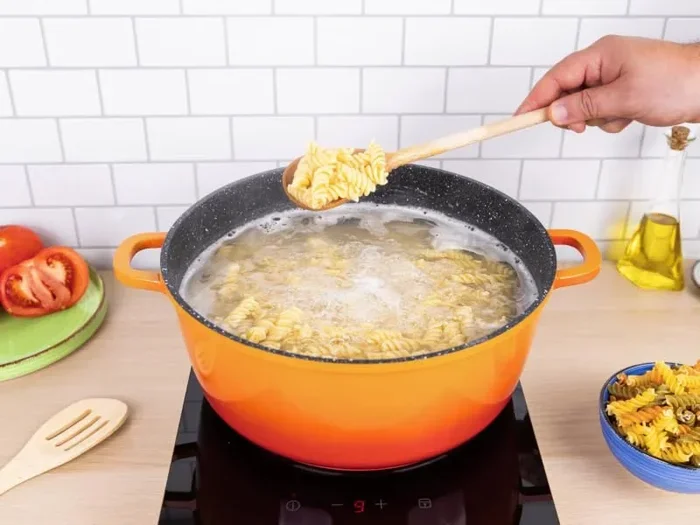
Once the water reaches a rolling boil, carefully add your pasta. Stir it immediately with a long spoon or fork to prevent the pieces from sticking together. This is especially important for shapes like spaghetti, fusilli, or penne that tend to clump up.
Keep the heat at medium-high to maintain a steady boil. You do not need the water to boil violently, but it should be bubbling consistently. Stir the pasta occasionally during cooking, maybe every 2 to 3 minutes. This keeps everything moving and prevents sticking.
Step 4: Cook Until Al Dente
Follow the cooking time on your pasta package, but start checking a minute or two early. Al dente pasta is cooked through but still has a slight firmness in the center. This is the ideal texture for most pasta dishes.
To test for doneness, scoop out a piece and bite into it. If it is tender but has a tiny bit of chew, it is ready. If you are making one pot Dutch oven pasta where the pasta cooks in sauce, the timing will be a little different. The pasta will absorb more liquid, so you may need to add extra water or broth as it cooks.
Step 5: Drain And Serve
Once your pasta is cooked to perfection, carefully pour it into a colander in the sink. Be careful with the steam and the hot water. If you are making a one pot dish, you can skip the draining step and serve directly from the Dutch oven.
Toss the drained pasta with your favorite sauce and serve immediately. Dutch oven pasta dishes taste best when served fresh and hot. The pasta will continue to absorb sauce as it sits, so timing your meal is important for the best flavor.
Best Dutch Oven Pasta Recipes To Try
Now that you know how to boil pasta in a Dutch oven, it is time to put that knowledge to use. Here are some delicious Dutch oven pasta recipes that you will love. Each one is simple, flavorful, and perfect for a weeknight dinner or a weekend treat.
Classic Spaghetti With Marinara
This is the go-to recipe for beginners. Boil your spaghetti in the Dutch oven, then toss it with a homemade or store-bought marinara sauce. Add some fresh basil, a drizzle of olive oil, and grated Parmesan cheese. It is simple, comforting, and always a crowd pleaser. The Dutch oven ensures every strand of spaghetti cooks evenly and gets coated in delicious sauce.
Creamy Garlic Parmesan Pasta
For a richer dish, try creamy garlic parmesan pasta in your Dutch oven. Cook penne or fettuccine in the pot, then melt butter and garlic in the same pot. Add heavy cream, parmesan cheese, and a pinch of salt and pepper. Toss the cooked pasta in the sauce and let it simmer for a minute. The result is a velvety, indulgent pasta that feels like it came from a fancy restaurant.
One Pot Tomato Basil Pasta
This one pot pasta recipe is a lifesaver on busy nights. Add spaghetti, cherry tomatoes, garlic, and basil directly to the Dutch oven with water. Bring it to a boil and cook until the pasta is tender and the water has reduced into a light sauce. The tomatoes break down and create a natural, flavorful coating for the pasta. It is fast, easy, and absolutely delicious.
Baked Ziti In A Dutch Oven
Did you know you can even bake pasta in a Dutch oven? Cook the ziti noodles until almost done, drain them, and toss with ricotta, mozzarella, and your favorite meat sauce. Return the Dutch oven to the oven and bake until bubbly and golden on top. Baked ziti in a Dutch oven comes out perfectly chewy on the inside and slightly crispy on the edges. It is a family favorite for a reason.
Common Mistakes To Avoid When Boiling Pasta In A Dutch Oven
Even though boiling pasta in a Dutch oven is straightforward, there are a few common mistakes that can ruin your results. Knowing what to avoid will help you cook pasta like a pro every time.
Using Too Little Water
The biggest mistake people make is not using enough water. When you add pasta to a small amount of water, the temperature drops too much and the pasta starts to stick together. The pasta also releases starch into a small amount of water, making it gummy and clumpy. Always use plenty of water. Your Dutch oven has the capacity, so take advantage of it.
Not Salting The Water Enough
Another common error is skimping on salt or forgetting it entirely. Pasta cooked in unsalted water tastes flat and boring. Salt the water generously. This is the one moment during cooking where you can actually season the pasta itself, so do not waste the opportunity.
Overcrowding The Pot
Trying to cook too much pasta in a small Dutch oven is a recipe for disaster. The pasta will stick, cook unevenly, and become a tangled mess. Stick to the recommended amount of pasta for your pot size. If you need to cook a larger batch, do it in two rounds or use a bigger Dutch oven.
Forgetting To Stir
Even with a heavy Dutch oven, pasta can stick to the bottom if you do not stir it occasionally. Make it a habit to stir the pasta a couple of times during the first few minutes of cooking and then every few minutes after that. This small habit makes a big difference in the final texture of your pasta.
Rinsing The Pasta After Draining
Some people rinse their pasta after draining it, but this is a mistake. Rinsing washes away the surface starch that helps sauce cling to the pasta. It also cools the pasta down too quickly. Unless you are making a cold pasta salad, skip the rinsing step and serve the pasta hot with your sauce right away.
Expert Tips For Perfect Dutch Oven Pasta Every Time
You have learned the basics, but these expert tips will take your Dutch oven pasta to the next level. These small adjustments can make a huge difference in your results.
- Save your pasta water. Before draining, scoop out a cup of the starchy pasta water. You can use it to thin out sauces or help them cling better to the pasta.
- Use a timer. Set a timer on your phone for the cooking time recommended on the pasta package. This prevents overcooking and keeps your pasta perfectly al dente.
- Preheat the Dutch oven. Adding pasta to already boiling water works better than adding it to cold water. The hot water starts cooking the pasta immediately and prevents sticking.
- Finish pasta in the sauce. Transfer your drained pasta directly into your simmering sauce and toss it together for 1 to 2 minutes. This helps the pasta absorb the sauce flavor fully.
- Invest in a good lid. A tight-fitting lid on your Dutch oven keeps heat and moisture trapped, which leads to faster boiling and more consistent cooking temperatures.
Frequently Asked Questions
Can I boil pasta in a cast iron Dutch oven?
Yes, absolutely. A cast iron Dutch oven works great for boiling pasta. The heavy construction keeps the water at a steady boil and distributes heat evenly. Just make sure your cast iron Dutch oven is properly seasoned and clean before use. Both seasoned and enameled cast iron Dutch ovens handle boiling pasta beautifully.
What size Dutch oven do I need to boil pasta?
A 5 to 7 quart Dutch oven is ideal for most pasta dishes. This size comfortably handles a pound of pasta with enough water for it to move freely. If you are cooking for a larger group, consider an 8 quart or larger Dutch oven. The key is to have enough space so the pasta does not crowd together.
Is it better to boil pasta in a Dutch oven or a regular pot?
A Dutch oven has several advantages over a regular thin pot. It retains heat better, distributes it more evenly, and maintains a consistent boil with less fluctuation. The heavy lid also helps bring water to a boil faster. While a regular pot can certainly boil pasta, a Dutch oven gives you more control and better results.
Can I cook one pot pasta in a Dutch oven?
Yes, a Dutch oven is perfect for one pot pasta recipes. The deep walls and large capacity allow you to cook pasta, sauce, vegetables, and liquid all together in one pot. The even heat distribution ensures the pasta cooks through without sticking or burning. One pot Dutch oven pasta is a fantastic way to save time and dishes.
How much water should I use to boil pasta in a Dutch oven?
A good rule of thumb is to use about 4 to 6 quarts of water for every pound of pasta. This gives the pasta plenty of room to move around and cook evenly. If you use too little water, the pasta will stick together and the starch concentration will be too high. More water equals better results.
Can I bake pasta in a Dutch oven?
Yes, you can bake pasta in a Dutch oven on the stovetop and then transfer it to the oven, or use it directly in the oven if your Dutch oven is oven-safe. Baked ziti, lasagna, and pasta bake are all excellent options. The Dutch oven traps moisture and heat beautifully, giving you perfectly baked pasta with a crispy top layer.
Conclusion
So, can you boil pasta in a Dutch oven? The answer is a resounding yes, you absolutely can. A Dutch oven is one of the best tools you can use for cooking pasta at home. It provides even heat, holds plenty of water, and makes the entire process simpler and more enjoyable. From classic spaghetti dishes to creamy one pot pasta recipes, the Dutch oven delivers consistent, delicious results every single time.
Whether you have a seasoned cast iron Dutch oven or a colorful enameled one, you are fully equipped to boil pasta like a pro. Remember to use enough water, salt it generously, and stir occasionally. With these simple steps and the tips shared in this guide, you will be making amazing Dutch oven pasta dishes in no time.
The beauty of using a Dutch oven for pasta is that it opens up a world of cooking possibilities. You are not limited to just boiling pasta. You can brown meat, simmer sauces, bake casseroles, and so much more. This one pot truly does it all. So the next time you are planning dinner, grab your Dutch oven and make something delicious. Your pasta will thank you, and your kitchen will smell incredible.
Start experimenting with different Dutch oven pasta recipes today. Try the classic marinara, the creamy garlic parmesan, or the easy one pot tomato basil version. Each one is a testament to how versatile and reliable a Dutch oven really is. Happy cooking, and enjoy every bite of your perfectly boiled Dutch oven pasta!