What Temperature To Cook Beef Fajitas In Oven Perfectly
Cooking beef fajitas in the oven is simple when you know the right temperature and timing. The ideal what temperature to cook beef fajitas in oven is between 400°F and 450°F, giving you that perfect sear and tenderness. Whether you use skirt steak, flank steak, or chicken, this guide covers everything you need. You’ll learn exact temperatures, cooking times, and pro tips for oven-baked fajitas that taste just like they came off a grill.
There’s something magical about beef fajitas. The sizzle, the aroma, the way everyone gathers around the table. If you love Mexican-inspired dishes but don’t have a grill, don’t worry. Your oven can deliver incredible results. The secret lies in knowing what temperature to cook beef fajitas in oven. Too low and you get dry, tough meat. Too high and you burn the outside while leaving the center raw. Getting the balance right changes everything.
This guide walks you through every detail. From the best oven temperature to the ideal cooking time, you’ll find practical tips that work every time. Whether you’re a beginner in the kitchen or a seasoned home cook, these steps will help you make tender beef fajitas that rival any restaurant. Let’s dive in and make your next fajita night a hit.
Key Takeaways
- Ideal Temperature: Cook beef fajitas at 400°F to 450°F for the best results.
- Cooking Time: Most beef fajitas need 12 to 20 minutes depending on the cut and thickness.
- Right Cut Matters: Skirt steak and flank steak work best for oven-baked fajitas.
- Rest the Meat: Always let your beef rest for 5 minutes before slicing against the grain.
- High Heat Is Key: A hot oven creates that authentic sizzling fajita texture and flavor.
- Season Generously: Use quality fajita seasoning for maximum flavor in every bite.
📑 Table of Contents
- The Best Oven Temperature for Beef Fajitas
- How Long to Cook Beef Fajitas in the Oven
- Step-by-Step Oven Beef Fajita Recipe
- Choosing the Right Beef Cut for Fajitas
- Oven-Baked Fajitas vs Grilled Fajitas
- Common Mistakes to Avoid When Baking Beef Fajitas
- Expert Insights on Perfect Beef Fajitas
- Key Takeaways
- Frequently Asked Questions
- Conclusion
The Best Oven Temperature for Beef Fajitas
Getting the oven temperature for fajitas right is the single most important step. Temperature controls everything — the sear, the juiciness, and the overall texture. Most experts agree that a hot oven is the way to go. But what does “hot” actually mean in this context?
Why High Heat Matters for Beef Fajitas
High heat is the key to authentic sizzling fajitas. When you blast beef at high temperatures, two things happen fast. First, the surface caramelizes, creating that deep, smoky flavor you love. Second, the inside stays moist because the cooking time is shorter. Low and slow might work for a roast, but fajitas need speed and intensity.
Think of it like this. A hot oven mimics the searing power of a cast-iron skillet or a blazing grill. The beef gets a beautiful crust while staying pink and tender inside. This is why high heat fajitas turn out so much better than their low-heat counterparts.
The Ideal Temperature Range Explained
The sweet spot for baking beef fajitas falls between 400°F and 450°F. Here is a quick breakdown of why this range works so well:
- 400°F: A solid, reliable temperature. Great for thicker cuts like flank steak. You get even cooking without burning.
- 425°F: The most popular choice. It balances speed and control perfectly for most beef cuts.
- 450°F: The hottest recommended setting. Best for thin skirt steak slices that need a quick, intense sear.
Most home cooks find that 425°F hits the sweet spot. It gives you enough heat to caramelize the outside while keeping the inside juicy. If you are using a convection oven, drop the temperature by about 25°F to account for the fan circulation.
How Long to Cook Beef Fajitas in the Oven
Temperature and time go hand in hand. Knowing how long to cook beef fajitas in oven depends on several factors. The cut of beef, the thickness of your slices, and whether you are cooking vegetables all play a role. Let’s break it down.
Cooking Times by Beef Cut
Different cuts of beef behave differently in the oven. Here is what you need to know about each popular option:
- Skirt Steak: Thin and flavorful, skirt steak cooks fast. At 425°F, it needs only 8 to 12 minutes. Slice it thin against the grain for the best texture.
- Flank Steak: Slightly thicker than skirt steak, flank steak takes 12 to 18 minutes at 425°F. It benefits from a good marinade beforehand.
- Tri-Tip: This thicker cut needs more time. Plan for 18 to 22 minutes at 400°F for a perfect medium-rare result.
- Chicken Fajitas: If you are making chicken instead, cook at 425°F for 15 to 20 minutes until the internal temperature reaches 165°F.
Visual and Texture Cues to Watch For
Timing is a guide, not a rule. The best way to know your fajita meat temperature is right is to use your senses. Look for these signs:
- The edges should be browned and slightly charred.
- The center should still be pink for steak (or white for chicken).
- The meat should feel firm but yield slightly when pressed.
- Juices should run clear, not red or bloody.
Use a meat thermometer for the most accurate results. For beef fajitas, aim for an internal temperature beef of 130°F to 135°F for medium-rare. Pull the meat out and let it rest. The temperature will rise a few degrees as it sits.
Step-by-Step Oven Beef Fajita Recipe
Now that you know the temperature and timing, let’s put it all together. This beef fajitas oven recipe is simple, fast, and absolutely delicious.
Preparing the Meat
Start with about 1.5 pounds of beef. Skirt steak and flank steak are the top choices. Slice the meat against the grain into thin strips, about a quarter-inch thick. Thin slices cook more evenly and stay tender.
Next, season generously. A good fajita seasoning makes all the difference. You can use store-bought mix or make your own with cumin, chili powder, paprika, garlic powder, onion powder, and a pinch of cayenne. Toss the strips in olive oil and seasoning. Let them sit for at least 15 minutes, or up to overnight in the fridge for deeper flavor.
Arranging on the Sheet Pan
Line a large baking sheet with foil or parchment paper for easy cleanup. Spread the beef in a single layer. Do not overlap the pieces. Overcrowding traps steam and prevents caramelization. You want each strip to touch the hot pan directly.
If you are adding fajita vegetables, place them on a separate sheet pan or add them in the last 5 minutes of cooking. Peppers and onions need less time than beef. Toss them with a little oil and salt, then spread them out in a single layer.
Serving Suggestions
Once the beef is done, let it rest for 5 minutes before slicing. This is a step many people skip, but it matters. Resting allows the juices to redistribute, giving you tender beef fajitas instead of dry ones.
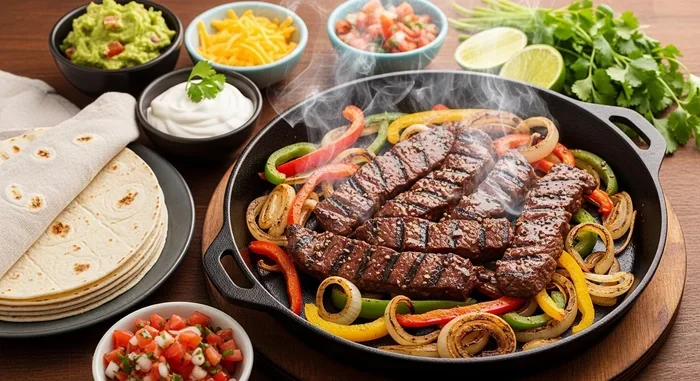
Serve your oven-baked fajitas warm with:
- Warm flour or corn tortillas
- Fresh pico de gallo or salsa
- Guacamole and sour cream
- Shredded cheese and lettuce
- A squeeze of fresh lime juice
The beauty of fajitas is customization. Everyone builds their own plate, which makes dinner fun and interactive.
Choosing the Right Beef Cut for Fajitas
The cut of beef you choose shapes everything. Some cuts are naturally more tender, while others bring bold flavor. Understanding your options helps you pick the best one for oven-baked fajitas.
Skirt Steak vs Flank Steak
Skirt steak and flank steak are the two most popular choices. Both deliver great flavor, but they have differences:
| Feature | Skirt Steak | Flank Steak |
|---|---|---|
| Thickness | Thinner, more flexible | Thicker, firmer |
| Flavor | Intensely beefy | Rich, slightly leaner |
| Cooking Time | Shorter (8-12 min) | Longer (12-18 min) |
| Tenderness | Naturally tender | Needs proper slicing |
| Price | Slightly more expensive | Budget-friendly |
Skirt steak is the traditional choice for carne asada oven style fajitas. It has more marbling, which means more flavor and juiciness. Flank steak is leaner and more affordable, making it a great everyday option. Both work beautifully when cooked at the right what temperature to cook beef fajitas in oven.
Other Great Options
Don’t limit yourself to just skirt and flank. Here are a few other cuts worth trying:
- Tri-Tip: A versatile cut that stays juicy in the oven. Slice thin and serve hot.
- Chuck Steak: Budget-friendly and full of flavor. Marinate well and cook at 400°F for best results.
- Sirloin: Lean and easy to find. Works well for chicken fajitas oven style recipes too.
Oven-Baked Fajitas vs Grilled Fajitas
Many fajita lovers debate grilled fajitas vs oven baked versions. Both methods have their merits. Let us compare them honestly.
Flavor Comparison
Grilling gives you that unmistakable smoky char. The open flame adds a depth of flavor that is hard to replicate. If you are a barbecue purist, grilling is hard to beat.
However, oven-baked fajitas have their own charm. The high heat of a hot oven creates a beautiful caramelized crust. When done right, oven-baked fajitas can be just as flavorful and juicy. The difference is subtle and mostly comes down to personal preference.
Convenience Factor
The oven wins when it comes to convenience. You do not need to watch the grill, manage flare-ups, or worry about uneven heat. With an oven, you set the temperature, pop the tray in, and focus on other parts of the meal. Sheet pan fajitas are especially easy because everything cooks on one pan with minimal fuss.
For busy weeknights, the oven method is a game-changer. You get restaurant-quality tender beef fajitas without the hassle of outdoor cooking.
Quick Tips for Perfect Oven Fajitas
- Always preheat your oven before placing the beef inside.
- Use a rimmed baking sheet to catch any juices and prevent spills.
- Do not skip the rest period after cooking. Five minutes makes a big difference.
- Slice against the grain for maximum tenderness.
- Add vegetables in the last few minutes to keep them crisp.
Common Mistakes to Avoid When Baking Beef Fajitas
Even with the best recipe, small mistakes can ruin your beef fajitas oven recipe. Here are the pitfalls to watch out for.
Overcooking the Meat
This is the number one mistake people make. Beef fajitas cook fast, and every extra minute dries them out. Set a timer and check the meat early. Pull it off the heat when it still looks slightly underdone in the center. The resting period finishes the job.
If you have ever bitten into a dry, tough fajita strip, overcooking was likely the cause. Keep a close eye on your beef and trust your thermometer.
Skipping the Rest Period
Cutting into hot beef immediately sends all those juices running out onto the cutting board instead of staying in the meat. A five-minute rest lets the fibers relax and reabsorb moisture. Your fajita cooking time includes the rest, so plan accordingly.
Overcrowding the Pan
It is tempting to fit everything on one sheet pan. But overlapping meat creates steam instead of roast. The result? Pale, soggy strips without that desirable char. Give each piece room to breathe. Use two sheet pans if you need to.
Using Cold Meat Straight from the Fridge
Cold beef cooks unevenly in a hot oven. The outside overcooks while the center stays raw. Take your meat out 20 to 30 minutes before cooking. Let it come to room temperature for more even results and better fajita meat temperature control.
Expert Insights on Perfect Beef Fajitas
Professional chefs share a few secrets that elevate homemade fajitas from good to great. Here is what the experts want you to know.
Marinate for flavor, not for tenderness. Most beef cuts used for fajitas are already naturally tender. The marinade adds flavor, not softness. Keep it to 30 minutes for thin cuts and a few hours for thicker ones.
Cast iron is your best friend. If you have a cast-iron skillet, use it inside the oven. It retains heat beautifully and gives you an extra layer of sear. Place the skillet in the oven while it preheats, then add the seasoned beef directly.
Fresh ingredients make a difference. Use fresh lime juice, real garlic, and quality spices. The difference between fresh and dried herbs is noticeable, especially in simple dishes like fajitas where the seasoning is front and center.
Serve immediately. Fajitas are best enjoyed right out of the oven. The heat keeps the meat juicy and the tortillas warm. Set everything up on a serving platter and let your guests build their own plates.
Key Takeaways
- Ideal Temperature: Cook beef fajitas at 400°F to 450°F for the best results.
- Cooking Time: Most beef fajitas need 12 to 20 minutes depending on the cut and thickness.
- Right Cut Matters: Skirt steak and flank steak work best for oven-baked fajitas.
- Rest the Meat: Always let your beef rest for 5 minutes before slicing against the grain.
- High Heat Is Key: A hot oven creates that authentic sizzling fajita texture and flavor.
- Season Generously: Use quality fajita seasoning for maximum flavor in every bite.
Frequently Asked Questions
What is the best temperature to cook beef fajitas in oven?
The best temperature to cook beef fajitas in oven is between 400°F and 450°F. This range provides enough heat to caramelize the outside while keeping the inside juicy and tender. Most home cooks find 425°F to be the perfect middle ground for consistent results.
How long does it take to bake beef fajitas in the oven?
Baking time depends on the cut and thickness of your beef. Thin skirt steak slices need 8 to 12 minutes, while thicker flank steak takes 12 to 18 minutes at 425°F. Always check the internal temperature and pull the meat when it reaches 130°F to 135°F for medium-rare.
Can I use chicken instead of beef for oven fajitas?
Absolutely. Chicken fajitas bake well at the same 425°F temperature. Cook chicken strips for 15 to 20 minutes until the internal temperature reaches 165°F. Chicken cooks faster than beef, so keep an eye on it to prevent drying out.
Do I need to marinate beef before baking fajitas?
Marinating is not required but highly recommended. Even 15 to 30 minutes in a simple marinade of olive oil, lime juice, and fajita seasoning adds significant flavor. For thicker cuts like flank steak, marinating for a few hours yields even better results.
What vegetables go best with oven beef fajitas?
Bell peppers, onions, and jalapeños are the classic choices. Slice them into thin strips and cook them on a separate sheet pan or add them in the last 5 minutes. Tomatoes, mushrooms, and zucchini also work well as additions for extra color and flavor.
How do I keep beef fajitas from drying out in the oven?
The key is not to overcook. Use high heat for a shorter cooking time, pull the beef off early, and let it rest for 5 minutes before slicing. Also, choosing naturally tender cuts like skirt steak and marinating them helps retain moisture throughout the cooking process.
Conclusion
Making beef fajitas in the oven is easier than most people think. The secret is simple: what temperature to cook beef fajitas in oven at 400°F to 450°F, keep an eye on the clock, and pull the meat at the right moment. High heat creates that beautiful caramelized crust, while the short cooking time keeps the inside moist and tender.
Whether you are using skirt steak, flank steak, or even chicken, the principles stay the same. Season generously, spread the meat in a single layer, and bake at a high temperature. Add your fajita vegetables at the right time, let the beef rest, and serve with all your favorite toppings.
Once you master the oven-baked fajitas technique, you will never go back to takeout. The flavor, the freshness, and the satisfaction of making them yourself is unbeatable. So preheat that oven, fire up the seasoning, and get ready to make the best fajita beef recipe your family will love. Happy cooking!