How To Clean Bunn Thermofresh Coffee Maker Like A Pro
Keeping your Bunn Thermofresh coffee maker clean ensures great-tasting coffee every morning. This guide covers everything from daily rinsing to deep descaling, so you can clean your Bunn Thermofresh like a professional. Follow these simple steps to remove buildup, eliminate odors, and extend the life of your brewer.
There’s nothing quite like a fresh cup of coffee from a Bunn Thermofresh. It brews fast, tastes great, and keeps your coffee warm on the drip tray. But here’s the thing most people forget: cleaning your Bunn Thermofresh coffee maker is just as important as using it. Over time, coffee oils, mineral deposits, and residue build up inside the machine. This affects the taste of your coffee and can even slow down the brewing process.
If you’ve noticed your coffee tastes a bit off or your Bunn brewer isn’t performing like it used to, it might be time for a thorough cleaning. How To Clean Bunn Thermofresh Coffee Maker is simpler than you might think. You don’t need expensive cleaners or complicated tools. With a few household items and about 30 minutes, you can have your machine looking and working like new. This guide walks you through every step, from basic daily care to deep descaling.
Whether you’ve had your Bunn Thermofresh for a few weeks or several years, this cleaning routine will help. Regular coffee maker maintenance not only improves flavor but also prevents mold growth and extends the life of your machine. Let’s dive in and get your brewer sparkling clean.
Key Takeaways
- Regular cleaning prevents buildup: A quick rinse after each use keeps your Bunn Thermofresh running smoothly and your coffee tasting fresh.
- Descaling is essential every 1-3 months: Mineral deposits from water can clog your machine and affect brew temperature.
- Use the right cleaning supplies: White vinegar, baking soda, and mild dish soap are all you need for a thorough clean.
- Don’t forget the spray head and funnel: These parts collect coffee oils and need special attention during cleaning.
- Proper maintenance saves money: A well-maintained Bunn Thermofresh can last for years, avoiding costly replacements.
📑 Table of Contents
- Why Cleaning Your Bunn Thermofresh Matters
- What You Need to Clean a Bunn Thermofresh
- How To Clean Bunn Thermofresh Coffee Maker: Step-by-Step Guide
- How Often Should You Clean Your Bunn Thermofresh?
- Common Mistakes to Avoid When Cleaning Your Bunn Thermofresh
- Tips for Maintaining Your Bunn Thermofresh Between Cleanings
- When to Replace Parts of Your Bunn Thermofresh
- Conclusion
Why Cleaning Your Bunn Thermofresh Matters
Many coffee lovers focus on buying the right beans and perfecting their brew ratio. But coffee maker maintenance is just as important for a great cup. A dirty machine can change the flavor, temperature, and even the safety of your coffee. Here’s why keeping your Bunn Thermofresh clean should be a priority.
Better Tasting Coffee
Coffee oils build up inside the brewing system over time. These oils turn rancid and mix with fresh coffee, creating a bitter or stale taste. When you clean your Bunn Thermofresh regularly, you remove those old oils. The result is a cleaner, brighter cup that lets the true flavor of your beans shine through.
Think about it this way. Would you cook a meal in a dirty pan? Of course not. The same logic applies to your coffee maker. A clean brewing system means pure, uncontaminated coffee every time.
Improved Brew Performance
Mineral deposits from water, also called limescale, can clog the internal tubes and spray head of your Bunn machine. This reduces water flow and lowers brew temperature. A machine that doesn’t reach the right temperature won’t extract coffee properly. You end up with weak, under-extracted coffee that tastes sour or thin.
Regular descaling removes these mineral deposits. Your Bunn Thermofresh will brew at the correct temperature, extracting the full flavor from your grounds. The coffee flows faster and tastes better.
Longer Machine Life
A well-maintained coffee maker lasts much longer than a neglected one. Bunn Thermofresh cleaning prevents corrosion, reduces strain on the heating element, and keeps parts functioning properly. Investing a little time in cleaning now saves you from buying a replacement machine later.
What You Need to Clean a Bunn Thermofresh
Before you start, gather your supplies. You don’t need anything fancy. Most items you probably already have in your kitchen.
Essential Cleaning Supplies
- White distilled vinegar – the best natural descaler for removing mineral buildup
- Baking soda – great for scrubbing away coffee stains and odors
- Mild dish soap – for washing removable parts
- Warm water – for rinsing and filling the reservoir
- Soft cloth or sponge – for wiping down the exterior
- Soft-bristled brush – for cleaning the spray head and funnel
- Dry towel – for drying parts after washing
Optional but Helpful Items
- Commercial descaling solution – if you prefer a store-bought option
- Cotton swabs – for reaching tight spaces around the spray head
- Toothpick or pin – for unclogging small holes in the spray head
For daily cleaning, you really only need warm water and a soft cloth. But for a deep clean, the vinegar and baking soda method works wonders. If you’d rather use a store-bought descaler, that works too. Just follow the product instructions.
How To Clean Bunn Thermofresh Coffee Maker: Step-by-Step Guide
Now let’s get into the actual cleaning process. How To Clean Bunn Thermofresh Coffee Maker involves three main phases: cleaning removable parts, descaling the internal system, and cleaning the exterior. Each phase is simple and straightforward.
Step 1: Clean the Removable Parts
Start by removing all parts that come out of the machine. This includes the funnel, spray head, drip tray, and water reservoir lid.
- Unplug the machine first. Safety always comes first.
- Remove the funnel and wash it with warm, soapy water. Use a soft sponge to scrub away any coffee residue.
- Take off the spray head and soak it in warm water for 10 minutes. Use a soft brush to clean the tiny holes where water sprays out.
- Wash the drip tray and reservoir lid with warm soapy water. Rinse thoroughly and dry with a clean towel.
- Wipe the carafe inside and out with warm soapy water. For stubborn stains, add a pinch of baking soda and scrub gently.
- Rinse all parts with clean water and let them air dry completely before reassembling.
Quick Tip: If you notice coffee oil buildup that won’t come off with soap and water, make a paste of baking soda and water. Apply it to the sticky areas and let it sit for 15 minutes before scrubbing. This works great for cutting through greasy residue.
Step 2: Descale the Internal System
Descaling is the process of removing mineral deposits from the inside of your machine. This is the most important part of deep clean coffee maker routines. You should descale your Bunn Thermofresh every one to three months, depending on how hard your water is.
- Fill the reservoir halfway with white distilled vinegar and the rest with warm water.
- Place a clean carafe on the warming plate and start a full brew cycle without coffee grounds.
- Let the vinegar solution sit in the machine for 30 minutes after the brew cycle completes. This gives it time to dissolve mineral deposits.
- Run two more brew cycles with fresh warm water to rinse out all the vinegar. You may need to run a third cycle if you still smell vinegar.
- Wipe down the inside of the reservoir with a soft cloth to remove any remaining residue.
Common Mistake: Don’t skip the rinse cycles. Vinegar has a strong smell and taste that can linger. Running multiple plain water cycles ensures your next pot of coffee won’t have a vinegar aftertaste.
Expert Insight: If you live in an area with very hard water, you may need to descale more frequently. Some Bunn owners run a vinegar cycle monthly. Others do it every three months. Watch for signs like slower brewing, lower water temperature, or a white film inside the reservoir. These are clear signals it’s time to descale.
Step 3: Clean the Spray Head
The spray head is the part that distributes water evenly over your coffee grounds. It has many small holes that can clog with coffee oils and mineral deposits. Cleaning it regularly makes a big difference in brew quality.
- Remove the spray head by pressing the release tabs or twisting it counterclockwise, depending on your model.
- Soak it in warm water with a splash of vinegar for 15-20 minutes.
- Use a soft brush or toothpick to clear out each small hole. Be gentle to avoid bending the spray nozzles.
- Rinse thoroughly and reattach it to the machine.
If you notice the spray pattern is uneven after reattaching, check that all holes are clear. A clogged spray head leads to uneven extraction and inconsistent coffee flavor.
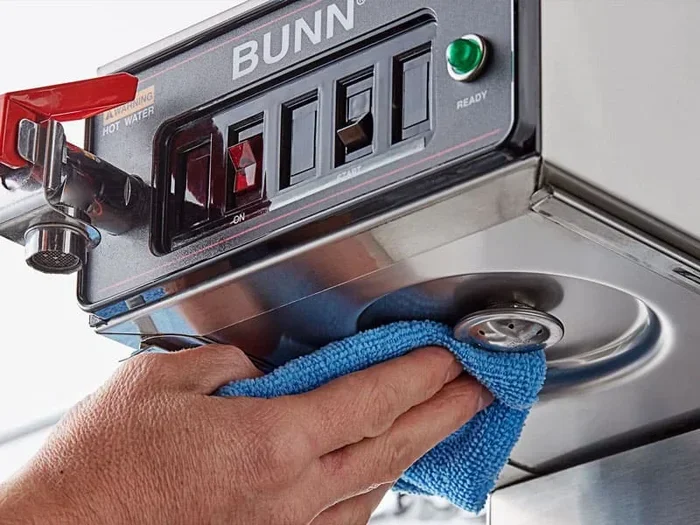
Step 4: Clean the Exterior and Warming Plate
The outside of your Bunn Thermofresh also needs attention. Coffee splashes, dust, and fingerprints can build up on the surface.
- Wipe the exterior with a damp cloth and a drop of mild dish soap. Dry immediately with a clean towel.
- Clean the warming plate with a damp cloth. If coffee has crusted on, sprinkle baking soda on the plate, add a little water, and scrub gently.
- Don’t use abrasive cleaners or steel wool on any part of the machine. These can scratch the surfaces and damage the finish.
- Clean the carafe lid and any other small parts with a cotton swab dipped in warm soapy water.
Quick Tip: For tough stains on the warming plate, make a paste of baking soda and water. Apply it, let it sit for 10 minutes, then wipe clean. This natural method works without harsh chemicals.
How Often Should You Clean Your Bunn Thermofresh?
Setting up a cleaning schedule makes it easy to stay on top of coffee maker maintenance. Here’s a simple routine to follow.
| Cleaning Task | Frequency | Time Needed |
|---|---|---|
| Rinse carafe and funnel | After every use | 2 minutes |
| Wipe exterior and warming plate | Weekly | 5 minutes |
| Deep clean removable parts | Every 2 weeks | 10 minutes |
| Every 1-3 months | 30 minutes | |
| Full thorough cleaning | Every 3-6 months | 45 minutes |
Following this schedule keeps your Bunn Thermofresh in top shape. The more consistent you are, the less time each cleaning session takes. A little maintenance goes a long way.
Common Mistakes to Avoid When Cleaning Your Bunn Thermofresh
Even well-meaning coffee lovers make mistakes when cleaning their machines. Here are some errors to avoid so you don’t damage your Bunn Thermofresh or compromise your coffee quality.
Using Harsh Chemicals
Bleach, abrasive cleaners, and harsh chemical solutions can damage the internal components of your Bunn brewer. They can also leave behind residues that contaminate your coffee. Stick to vinegar, baking soda, and mild dish soap. These are safe, effective, and won’t harm your machine.
Skipping the Rinse Cycles After Descaling
This is the most common mistake people make. Vinegar is excellent at breaking down mineral deposits, but it shouldn’t stay in the machine. Always run at least two full rinse cycles with plain water after descaling. Your coffee will taste much better.
Not Cleaning the Spray Head Regularly
The spray head is easy to forget because it stays attached to the machine. But coffee oils and mineral buildup here directly affect how water hits your grounds. A clogged spray head means uneven brewing and poor coffee quality. Make cleaning it part of your regular routine.
Using Cold Water for Descaling
Always use warm water when filling the reservoir for descaling. Cold water doesn’t dissolve vinegar as effectively and doesn’t help break down mineral deposits as well. Warm water improves the cleaning action and helps the solution work faster.
Tips for Maintaining Your Bunn Thermofresh Between Cleanings
Daily habits make a huge difference in how often you need to deep clean your machine. These simple tips keep your Bunn Thermofresh running smoothly between thorough cleaning sessions.
- Empty the carafe after each use. Don’t let old coffee sit in the pot overnight. Stale coffee can develop off-flavors and odors.
- Wipe up spills immediately. Coffee spills on the warming plate can burn and become hard to remove. Quick cleanup prevents this.
- Use filtered water. Filtered water has fewer minerals, which means less limescale buildup inside your machine. This extends the time between descaling sessions.
- Leave the lid open after brewing. This allows the machine to air out and prevents moisture buildup that can lead to mold or mildew.
- Store coffee beans properly. Fresh beans make better coffee and produce less oily residue. Keep beans in an airtight container away from heat and light.
If you ever notice a musty smell coming from your Bunn Thermofresh, it’s a sign that moisture has been trapped somewhere. Run a vinegar cycle and make sure all parts are completely dry before reassembling. For more tips on maintaining kitchen appliances, check out our guide on how to make coffee in microwave oven for alternative brewing methods that are easy to clean.
Another great way to keep your coffee routine fresh is to experiment with different warming techniques for your favorite snacks. If you love pairing coffee with warm pastries, learn how to heat Cinnabon in oven for a perfect coffee-and-pastry pairing. And if you ever need to warm up leftovers or beverages, our guide on how to reheat something in the oven covers safe and effective warming methods.
When to Replace Parts of Your Bunn Thermofresh
Even with the best coffee maker care tips, some parts will eventually wear out. Knowing when to replace them keeps your machine performing at its best.
- Spray head: Replace if the nozzles are bent or clogged beyond cleaning. A damaged spray head leads to uneven water distribution.
- Funnel: Replace if it develops cracks or warping. A damaged funnel can cause grounds to bypass the filter.
- Carafe: Replace if it becomes stained beyond removal or if the glass is chipped. A stained carafe can harbor bacteria and affect coffee taste.
- Water tube: Replace if you notice cracks or kinks. A damaged tube can leak or restrict water flow.
- Warming plate: Replace if it no longer keeps coffee warm or shows signs of scorching.
Bunn replacement parts are widely available online and through authorized dealers. Regular inspection of these parts during your cleaning routine helps you catch issues early before they become bigger problems.
Conclusion
How To Clean Bunn Thermofresh Coffee Maker doesn’t have to be complicated or time-consuming. With a simple routine of daily rinsing, weekly wiping, and monthly descaling, you can keep your brewer in excellent condition. The key is consistency. Small efforts add up to big results.
A clean Bunn Thermofresh brews better coffee, runs more efficiently, and lasts for years. You’ll notice the difference in every cup. The flavors will be cleaner, the brewing faster, and the machine will look and smell fresh.
Start today. Grab your vinegar, grab your sponge, and give your Bunn Thermofresh the care it deserves. Your morning coffee will thank you. And once you’ve got your machine sparkling clean, you can focus on what really matters: enjoying a perfect cup of coffee to start your day.
Frequently Asked Questions
Can I use lemon juice instead of vinegar to descale my Bunn Thermofresh?
Yes, lemon juice works as a natural descaler and has a milder smell than vinegar. However, vinegar is more effective at breaking down mineral deposits. If you prefer lemon juice, use the same method but run an extra rinse cycle to remove any citrus residue. Both options are safe for your Bunn machine.
How do I know if my Bunn Thermofresh needs descaling?
Signs that your machine needs descaling include slower brewing times, a decrease in water temperature, white mineral deposits inside the reservoir, and a change in coffee taste. If you notice any of these symptoms, it’s time to run a vinegar cleaning cycle to remove buildup.
Is it safe to put the Bunn Thermofresh parts in the dishwasher?
Most removable Bunn Thermofresh parts are dishwasher safe, including the carafe, funnel, and drip tray. However, check your user manual to confirm. The spray head and water reservoir are best washed by hand to prevent damage from high dishwasher heat and pressure.
How long does the descaling process take?
The full descaling process takes about 30 to 45 minutes, including brew cycles and rinse cycles. The actual hands-on time is minimal since the machine does most of the work. You just need to fill the reservoir, start the brew cycle, and run rinse cycles afterward.
Can I use soap inside the Bunn Thermofresh reservoir?
No, avoid using soap inside the water reservoir. Soap residue can be difficult to rinse out completely and may affect the taste of your coffee. Vinegar and water are the best combination for cleaning the internal system. For removable parts, mild dish soap is fine to use.
What type of vinegar works best for cleaning a Bunn Thermofresh?
White distilled vinegar is the best choice for descaling a Bunn Thermofresh. It’s affordable, widely available, and highly effective at dissolving mineral deposits. Avoid apple cider vinegar or other flavored vinegars, as they can leave behind residues and affect coffee flavor.