How To Keep Pancakes Warm In Oven For A Big Breakfast
Keeping pancakes warm in oven is the easiest way to serve a perfect big breakfast without cold or soggy pancakes. You will learn the right oven temperature, best oven-safe dishes, and simple warming techniques that work every time. These pancake tips will save your breakfast spread and impress your guests.
There is nothing better than a big breakfast on a lazy weekend morning. Pancakes sit right at the top of that list. But here is the problem. You make the first batch, and by the time everyone sits down, the last pancake is cold. That is where keeping pancakes warm in oven saves the day. It is simple, it works, and it makes a huge difference. Whether you are cooking for family or hosting a breakfast party, knowing how to hold your pancakes at the right warmth changes everything. In this guide, you will find every tip and trick you need to serve hot, fluffy pancakes all morning long.
Keeping pancakes warm in oven is not just about tossing them in and forgetting them. There is a sweet spot for temperature, the right kind of dish to use, and a few small mistakes that can ruin the whole batch. I have tested many methods over the years, and I am sharing what actually works. By the end of this article, you will know exactly how to keep your breakfast spread hot, fresh, and ready to serve. Let us get into it.
Key Takeaways
- Use 200°F (93°C): This is the ideal oven temperature to keep pancakes warm without drying them out.
- Cover with foil: Wrapping your pancake stack in aluminum foil traps moisture and keeps them fluffy.
- Choose the right dish: An oven-safe container or warming tray works best for holding multiple batches.
- Avoid stacking too high: A flat, single layer helps air circulate and keeps every pancake evenly warm.
- Timing matters: Pull pancakes out of the oven within 20–30 minutes for the best texture and taste.
- Batch cooking saves time: Cook in shifts and store finished pancakes in the warming oven until serving.
📑 Table of Contents
- Why Keeping Pancakes Warm Matters
- Best Oven Temperature to Keep Pancakes Warm
- Best Containers and Dishes for Warming Pancakes
- Step-by-Step: How To Keep Pancakes Warm In Oven
- Common Mistakes To Avoid
- Pro Tips for Perfect Warm Pancakes
- Comparison: Different Warming Methods
- Quick Tips Summary
- Conclusion
Why Keeping Pancakes Warm Matters
You might wonder why this even needs an article. Can you not just leave pancakes on a plate? Well, yes. But the results are not great. Cold pancakes feel dense and chewy. They lose that light, airy texture that makes them so good. When you keep food warm properly, you preserve the moisture and the soft bite. This is especially important when you are cooking a big breakfast for several people.
Think about it. You spend time making each batch of fluffy pancakes from scratch. You measure the batter, you heat the griddle, you flip each one carefully. The last thing you want is for all that effort to go to waste because the food cools down too fast. A warm oven acts like a holding zone. It keeps your pancake stack ready to serve whenever your guests are ready to eat.
Also, a breakfast buffet or a morning gathering means people eat at different times. Some people grab their plate right away. Others take a few minutes to sit down and chat. Having a warm place to hold your pancakes means everyone gets the same great experience. No cold food. No rushing. Just good food served at the right temperature.
The Science Behind Warm Pancakes
Here is a quick look at what happens when pancakes cool down. As the temperature drops, the starch in the batter firms up. The moisture inside evaporates. This makes the pancake feel dry and tough. By keeping them in a warm oven, you slow down this process. The gentle heat holds the moisture in and keeps the texture soft. This is why batch cooking with a warming oven is such a smart move.
Best Oven Temperature to Keep Pancakes Warm
The most important part of keeping pancakes warm in oven is getting the temperature right. Too hot and you will dry them out or even start cooking them further. Too cool and they will just sit there getting cold. The sweet spot is around 200°F (93°C). This low, steady heat holds your pancakes at a safe serving temperature without changing their texture.
If your oven does not go that low, set it to the lowest setting possible. Most home ovens can go down to about 170°F (77°C). That still works well. The key idea is to use gentle, indirect heat. You are not baking or cooking here. You are simply holding the food at a warm, ready-to-serve state.
Temperature Quick Reference
Here is a simple guide to help you set the right oven temperature for keeping pancakes warm:
- 200°F (93°C): The ideal temperature. Holds pancakes warm and soft for up to 30 minutes.
- 175°F (80°C): A good backup setting. Works well for shorter holding times.
- Lowest setting: Use this if your oven does not go below 170°F. Still effective for 20–30 minutes.
- Above 225°F (107°C): Too hot. Risk of drying out the edges or overcooking the pancakes.
Always use an oven thermometer if you are unsure about your oven’s actual temperature. Many ovens run hotter or cooler than what the dial says. A simple thermometer takes the guesswork out of it.
Best Containers and Dishes for Warming Pancakes
Not every dish works well for keeping pancakes warm in oven. You want something that holds heat evenly and lets the steam escape just enough. Using the wrong container can make your pancakes soggy on the bottom or dry on the edges. Here are the best options.
Oven-Safe Baking Dish
A standard glass or metal baking dish works great. Place your cooked pancakes in a single layer. Do not stack them too high. A single layer lets air flow around each pancake and keeps the temperature even. If you need to stack, keep it to two or three layers at most.
Wire Rack Over a Baking Sheet
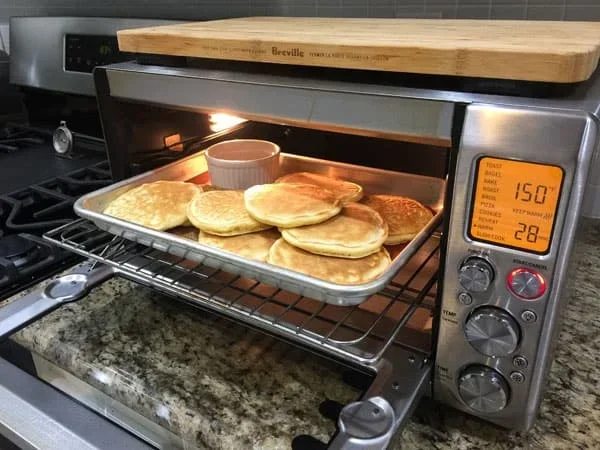
This is one of the best methods for keeping pancakes warm without making them soggy. Place a wire cooling rack on top of a baking sheet. Lay your pancakes on the rack. The air circulates underneath and keeps the bottom from getting wet. Put the whole setup in the oven at 200°F. This method works wonders for batch cooking.
Warming Tray or Chafing Dish
If you are hosting a breakfast party, a warming tray is a great investment. These electric trays maintain a steady low temperature and are perfect for keeping a large batch of pancakes ready. They are also portable, which makes them great for a breakfast buffet setup on the table.
Oven-Safe Container with Lid
An oven-safe container with a lid traps just enough moisture to keep pancakes soft. Make sure the lid is not sealed tight. You want a little airflow. A loose lid or a foil cover works perfectly. This is a simple and effective way to serve hot pancakes without worrying about them drying out.
Step-by-Step: How To Keep Pancakes Warm In Oven
Now that you know the temperature and the right dish, let me walk you through the full process. Follow these steps for perfectly warm pancakes every single time.
Step 1: Preheat Your Oven
Before you start cooking your pancakes, turn the oven on. Set it to 200°F and let it preheat for about 10 minutes. This ensures the oven reaches the right warming temperature before your first batch is ready.
Step 2: Cook Pancakes in Batches
Cook your pancakes on the griddle or skillet as usual. As each batch comes off the heat, place them directly into the preheated oven. Lay them flat on the wire rack or baking dish. Do not let them sit on the counter while you cook the next batch. The oven holds them at the right warmth.
Step 3: Cover With Foil
Once all your batches are in the oven, cover the dish loosely with aluminum foil. This traps steam and keeps the pancakes from drying out. Make sure the foil is not wrapped tightly. You want a little breathing room for the steam to escape.
Step 4: Check and Serve
After about 15–20 minutes, check the pancakes. They should feel warm to the touch. Use oven mitts to pull out the dish and serve. If you need more time, you can leave them in for another 10 minutes. But do not go beyond 30 minutes total, or the texture starts to suffer.
Step 5: Serve Immediately
Take the pancakes out and serve them right away. Top them with butter, syrup, fruit, or whatever your favorites are. The warmth will hold the toppings nicely and make every bite feel fresh off the griddle.
Common Mistakes To Avoid
Even when you follow the basic steps, small mistakes can ruin your results. Here are the most common ones people make when trying to keep pancakes warm in oven.
Setting the Temperature Too High
This is the number one mistake. A hot oven will dry out your pancakes fast. The edges become crispy and the centers turn rubbery. Stick to 200°F or lower. Gentle heat is the secret.
Stacking Pancakes Too High
It might be tempting to pile all the pancakes on top of each other. But this traps steam unevenly and creates soggy spots on the bottom. Keep them in a single layer whenever possible. Use multiple dishes if you need more space.
Leaving Them in Too Long
Pancakes are best served within 20–30 minutes of coming out of the oven. Leaving them for an hour or more will cause them to lose moisture and go stale. If you are not ready to serve within that window, it is better to make fresh batches.
Forgetting to Cover
An uncovered pancake in a warm oven will dry out quickly. Always use foil or a lid to trap moisture. This one small step makes a big difference in the final texture and taste.
Using the Wrong Dish
Do not use a plastic container or a dish that is not oven-safe. This is a safety risk and can ruin your pancakes. Always check that your dish can handle oven temperatures before placing it inside.
Pro Tips for Perfect Warm Pancakes
Here are some extra tips from experience that will take your warm pancake game to the next level.
- Use a silicone mat on the rack: This prevents the bottom from sticking and makes cleanup easy.
- Brush pancakes lightly with butter: A thin layer of butter before placing them in the oven adds flavor and locks in moisture.
- Warm your plates too: Place your serving plates in the oven for a few minutes before serving. Warm plates keep pancakes warm longer on the table.
- Make the batter ahead: Prepare your pancake recipe the night before and refrigerate it. In the morning, just stir and start cooking. This saves time and lets you focus on keeping everything warm.
- Add syrup just before serving: Pour syrup on the pancakes right when you serve them. Warm syrup melts better and tastes more delicious on a hot pancake.
- Use a timer: Set a timer for 20 minutes. It is easy to forget about the pancakes in the oven when you are busy with other breakfast dishes.
Expert Insight: The Best Approach for Large Gatherings
If you are cooking for a crowd, timing becomes critical. Cook in shifts and keep each batch moving from the griddle to the oven. A good rhythm is to cook three to four batches, hold them in the oven, and serve. This way, every plate goes out hot and fresh. The warming oven becomes your best friend during a big breakfast morning.
Another trick is to assign someone to manage the oven while you cook. This keeps the process smooth and ensures no batch sits out too long. Breakfast hosting is all about timing, and a warm oven takes away a lot of the stress.
Comparison: Different Warming Methods
There are several ways to keep pancakes warm. Let us compare the most common ones so you can pick what works best for your situation.
| Method | Best For | Holding Time | Keeps Moisture? | Ease of Use |
|---|---|---|---|---|
| Oven at 200°F | Big breakfasts, multiple batches | 20–30 minutes | Yes (with foil) | Easy |
| Warming tray | Breakfast buffet, serving table | 45–60 minutes | Yes | Very Easy |
| Microwave (short bursts) | Small batches, quick reheat | 5–10 minutes | No (can get soggy) | Easy |
| Skillet on low heat | Last few pancakes | 10–15 minutes | Yes | Moderate |
| Counter (no heat) | Quick serving, small groups | 5–10 minutes | No (dries out fast) | Easiest |
As you can see, the oven method offers the best balance of moisture retention and holding time. A warming tray is great for longer events, but not everyone has one. The oven is the most reliable and accessible option for most kitchens.
Quick Tips Summary
- Always preheat the oven to 200°F before you start cooking.
- Use a wire rack for the best airflow and least soggy bottoms.
- Cover with foil loosely to trap moisture.
- Do not stack pancakes more than two or three high.
- Serve within 30 minutes for the best taste and texture.
- Warm your plates in the oven for an extra touch of care.
- Use oven mitts when handling hot dishes.
Conclusion
Keeping pancakes warm in oven is one of the simplest and most effective ways to elevate your big breakfast experience. With the right temperature, the right dish, and a few simple habits, you can serve hot, fluffy pancakes all morning long. No more cold food. No more rushing. Just a relaxed, enjoyable breakfast that everyone will love.
The key is to keep things simple. Set your oven to 200°F, use an oven-safe container or wire rack, cover with foil, and serve within 30 minutes. These small steps make a huge difference. Whether you are cooking for your family or hosting a breakfast party, these tips will help you pull off a flawless morning meal.
Now that you know how to keep food warm properly, it is time to put it into practice. Try these methods at your next weekend breakfast and notice the difference. Your pancakes will taste better, your guests will be happier, and you will feel more in control of the whole breakfast spread. Happy cooking, and enjoy every warm, delicious bite.
Frequently Asked Questions
What is the best temperature to keep pancakes warm in oven?
The best temperature is 200°F (93°C). This low heat holds pancakes at a safe serving temperature without drying them out. If your oven runs hot, you can drop it to 175°F for even gentler warming.
Can I keep pancakes warm in the oven for over an hour?
It is not recommended. Pancakes are best within 20 to 30 minutes of warming. After that, they start to lose moisture and become dry or stale. For longer events, use a warming tray or make fresh batches in shifts.
Do I need to cover pancakes with foil in the oven?
Yes, covering them loosely with aluminum foil helps trap steam and keeps the pancakes moist. Make sure the foil is not wrapped tightly so some air can still circulate. This simple step prevents the pancakes from drying out on the edges.
Can I use a microwave instead of an oven to keep pancakes warm?
A microwave works for quick reheat but is not ideal for holding pancakes warm. It can make them soggy or rubbery. The oven provides gentle, even heat that preserves the fluffy texture much better.
What is the best dish to put pancakes in for warming?
A wire rack over a baking sheet is the top choice. It allows air to flow underneath and keeps the bottoms from getting soggy. A glass or metal baking dish also works well for single-layer storage.
How do I prevent pancakes from sticking to the dish in the oven?
Line your baking dish or rack with a silicone mat or a light layer of parchment paper. You can also brush the pancakes with a thin layer of butter before placing them in the oven. This prevents sticking and adds a touch of flavor.